
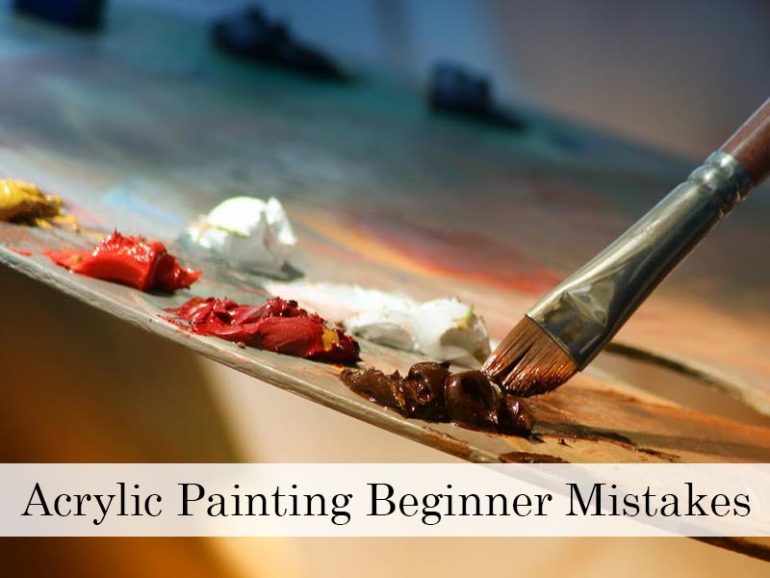
Acrylic paint is a brilliant medium for beginners. It is fast-drying, forgiving and incredibly versatile. But like any art material, it can take a little getting used to.
If you are new to acrylics or just want to improve your painting technique, this post is for you. We are covering five of the most common mistakes beginners make with acrylics and more importantly, how to fix them! Whether you are studying on one of our courses or simply experimenting at home, these tips will help you get smoother blends, cleaner colours, and better results overall.
Before we dive in, here is a great YouTube video that covers some beginner information which you might find helpful.
1. Not Blending Fast Enough
Acrylic paint dries quickly, often within minutes, which can be frustrating if you are used to blending like you would with oils or watercolours.
Fix it:
- Work in small sections and blend as you go.
- Use a stay-wet palette or mist your paints with water to keep them workable longer.
- Try using a slow-drying acrylic medium if you need more time to blend.
2. Using Too Much Paint at Once
Squeezing out large blobs of acrylic paint can lead to waste — and because it dries quickly, you may find half of it unusable by the time you are done.
Fix it:
- Only dispense small amounts of paint at a time.
- Keep a misting spray bottle nearby to keep it from drying on your palette.
- Use a stay-wet palette if working for longer periods.
3. Overmixing Colours and Creating Mud
Beginners often mix too many colours together in an attempt to get the “perfect” shade. Unfortunately, this can lead to muddy or dull colours.
Fix it:
- Stick to a limited colour palette.
- Learn which colours are complementary (and might neutralise each other).
- Try mixing on your canvas instead of the palette for more dynamic results.
4. Painting in Streaky or Patchy Layers
Sometimes new acrylic painters apply paint too thinly, especially when adding water, which can leave behind uneven strokes or visible underlayers.
Fix it:
- Apply paint in smooth, confident strokes.
- If using water, be careful not to dilute too much.
- Let each layer dry fully before adding more on top for better coverage.
5. Using the Wrong Brush for the Job
Not all brushes are created equal. Using a soft watercolour brush for thick acrylics, or a stiff brush for delicate details, can lead to frustration.
Fix it:
- Invest in a few quality synthetic brushes designed for acrylics.
- Use flat brushes for large areas, round or filbert brushes for curves and detail, and fan brushes for texture.
- Clean your brushes thoroughly — acrylic paint can ruin them if left to dry.
Final Thoughts
Acrylics are fun, fast, and perfect for experimenting, so do not worry about getting everything right straight away. Like any medium, the more you practise, the more you will understand how it behaves.
Our General Drawing & Painting Diploma both cover the basics and beyond guiding you through acrylics with tutor feedback and creative exercises along the way. Head over to our website if you are interested in learning more from our tutors.
Happy painting and do share your work with us if you give acrylics a try!
If you would like to receive a roundup of all of our blog posts once a week to keep you inspired in your inbox, why not sign up to our newsletter. You can access our sign up at the top of our page. If you are a London Art College student and you would like your artwork featured here, drop us a line at any time.
