
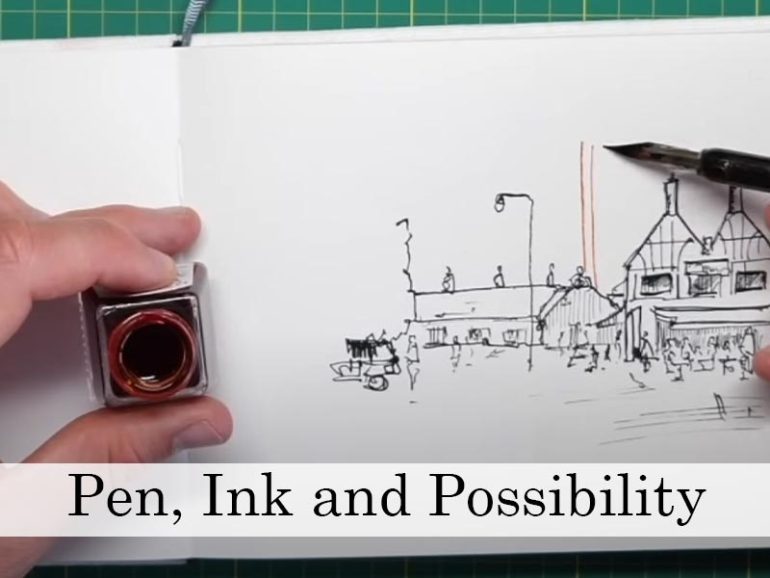
Looking to sharpen your mark-making skills? Pen and ink is the perfect medium to build precision, texture, and confidence. Today’s post highlights a brilliant beginner-friendly YouTube tutorial that explores a variety of simple yet effective ink textures.
This quick and engaging demo walks you through drawing in pen and ink along with creating realistic textures. It’s a great way to experiment, understand how different line work conveys form and surface, and most importantly, enjoying the process without feeling overwhelmed.
Using pen and ink may feel limiting at first, but it’s also wonderfully freeing. A few thoughtful lines can suggest texture, volume and light, without overworking your piece.
5 Top Tips for Drawing with Pens
1. Start Light and Build Slowly
Even though you cannot erase ink, you can build up gradually. Begin with light, short lines. Focus on the structure first, then layer your textures and shadows slowly.
2. Vary Your Line Weight
Using thicker and thinner lines can add depth and interest. Press lightly for delicate details and increase pressure for bolder outlines or shadows. Even a single pen can produce a range of effects.
3. Practice Basic Techniques First
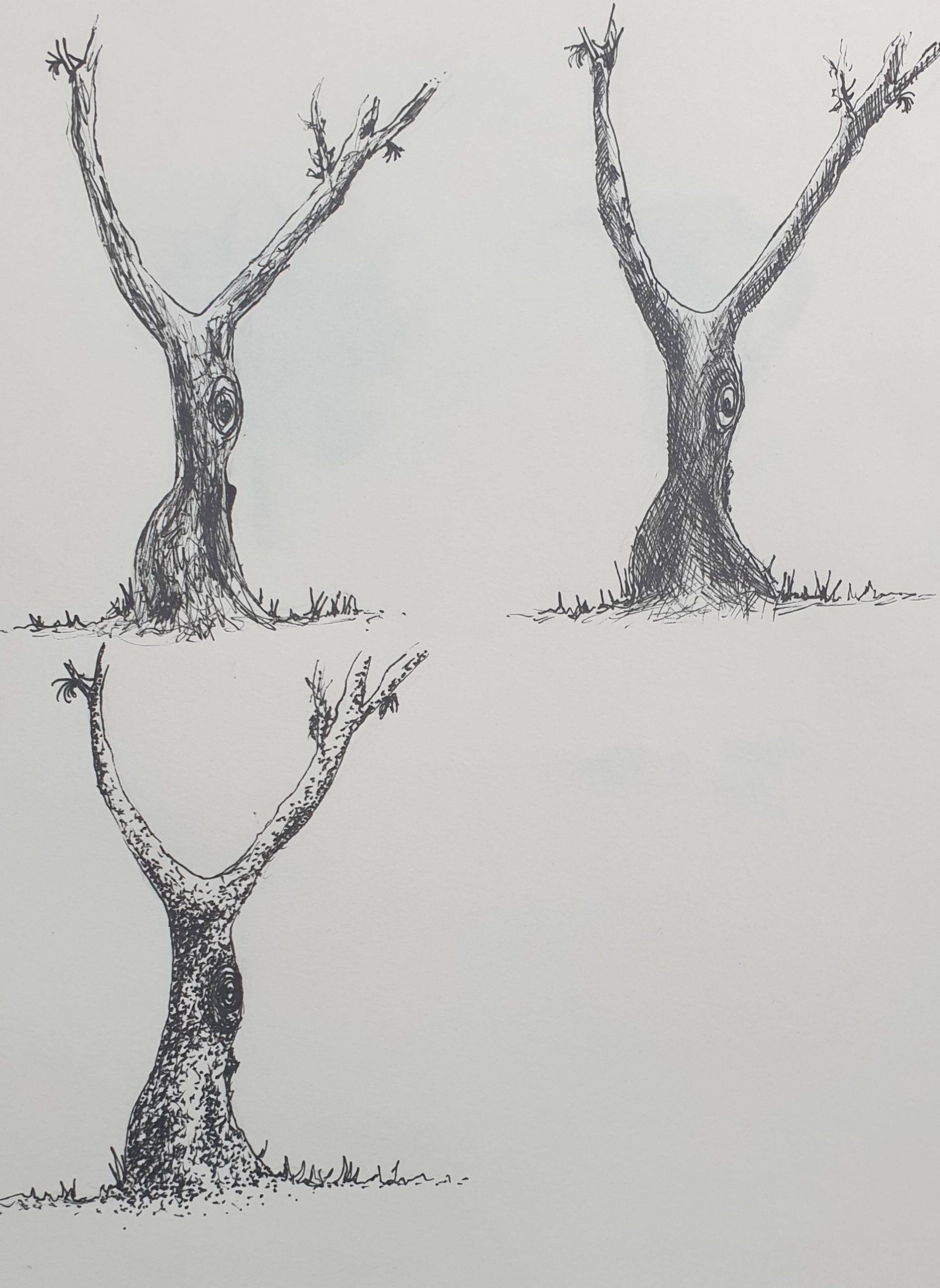
Before jumping into a full drawing, try a few key techniques: hatching, cross-hatching, stippling, contour lines, and scribble shading. These are the building blocks of confident pen work.
4. Use Pencil as a Guide (if needed)
There’s no harm in lightly sketching your composition in pencil first. Once you’re happy with the layout, go over it in pen—then erase the pencil once the ink is dry. A great way to reduce the pressure!
5. Embrace Imperfections
Wobbly lines, smudges, unexpected marks—they’re all part of the process. Ink has a character of its own, and letting go of perfection often leads to more expressive, confident results.
Your Own Texture Study
Choose three everyday objects from around your home. They could be natural (like a leaf or shell), manmade (like a mug or shoe), or something in between.
- Study their surface – What kind of texture do they have? Smooth, rough, bumpy, patterned?
- Use pen or fine liner to draw a small section of each object, focusing only on the texture – not the full form.
- Try three different mark-making styles – e.g. cross-hatching, stippling, broken lines, scribble shading.
Label your textures if you like, and keep the sketches loose and experimental. The aim is not a perfect drawing – it’s to explore how different lines suggest different surfaces.
If you want to take it further, pick your favourite object and do a full sketch using only one of the texture styles throughout!
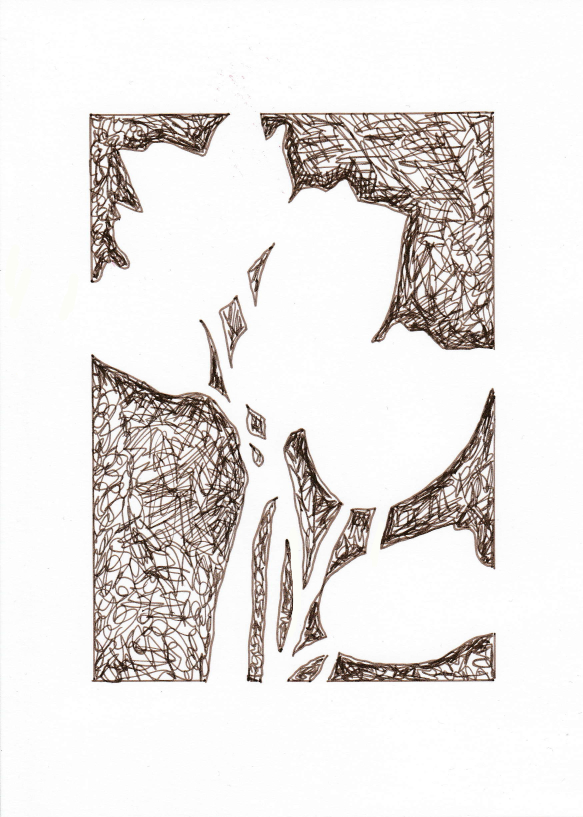
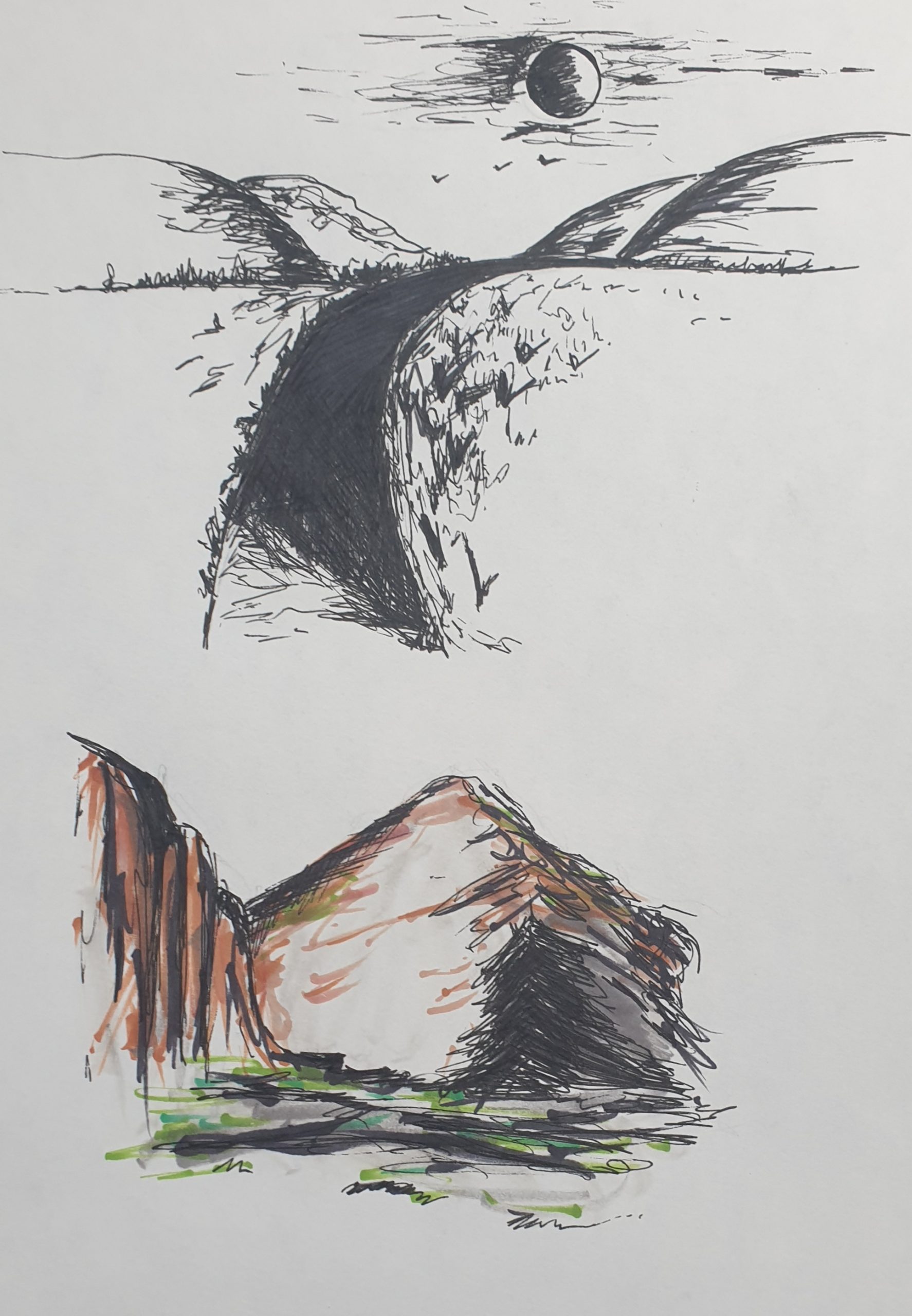
The beauty of pen and ink is that mistakes are part of the journey. Many artists start with a light pencil sketch before going in with ink, and layering up texture can also disguise any initial missteps. You can then erase your original lines, or leave them in… completely up to you! If you need a little but more guidance using pen and Ink why not sigh up to our short Drawing with Pens course. Here are a few images from students on the course. Audrey Quinton and Raihaan Akram.
If you would like to receive a roundup of all of our blog posts once a week to keep you inspired in your inbox, why not sign up to our newsletter. You can access our sign up at the top of our page. If you are a London Art College student and you would like your artwork featured here, drop us a line at any time.
