
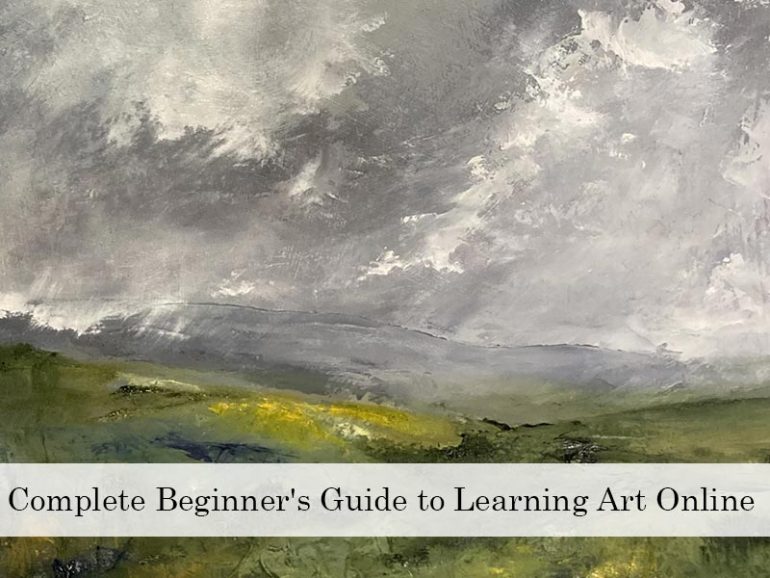
Starting your artistic journey can feel overwhelming, especially when you’re learning from home. Whether you are a complete beginner picking up a pencil for the first time or someone who has always wanted to paint but never knew where to start, online art education has opened up incredible opportunities to develop your creative skills from anywhere in the world.
At London Art College, we’ve been helping students discover their artistic potential through distance learning since 1931. In this comprehensive guide, we’ll walk you through everything you need to know to begin your online art education journey successfully.
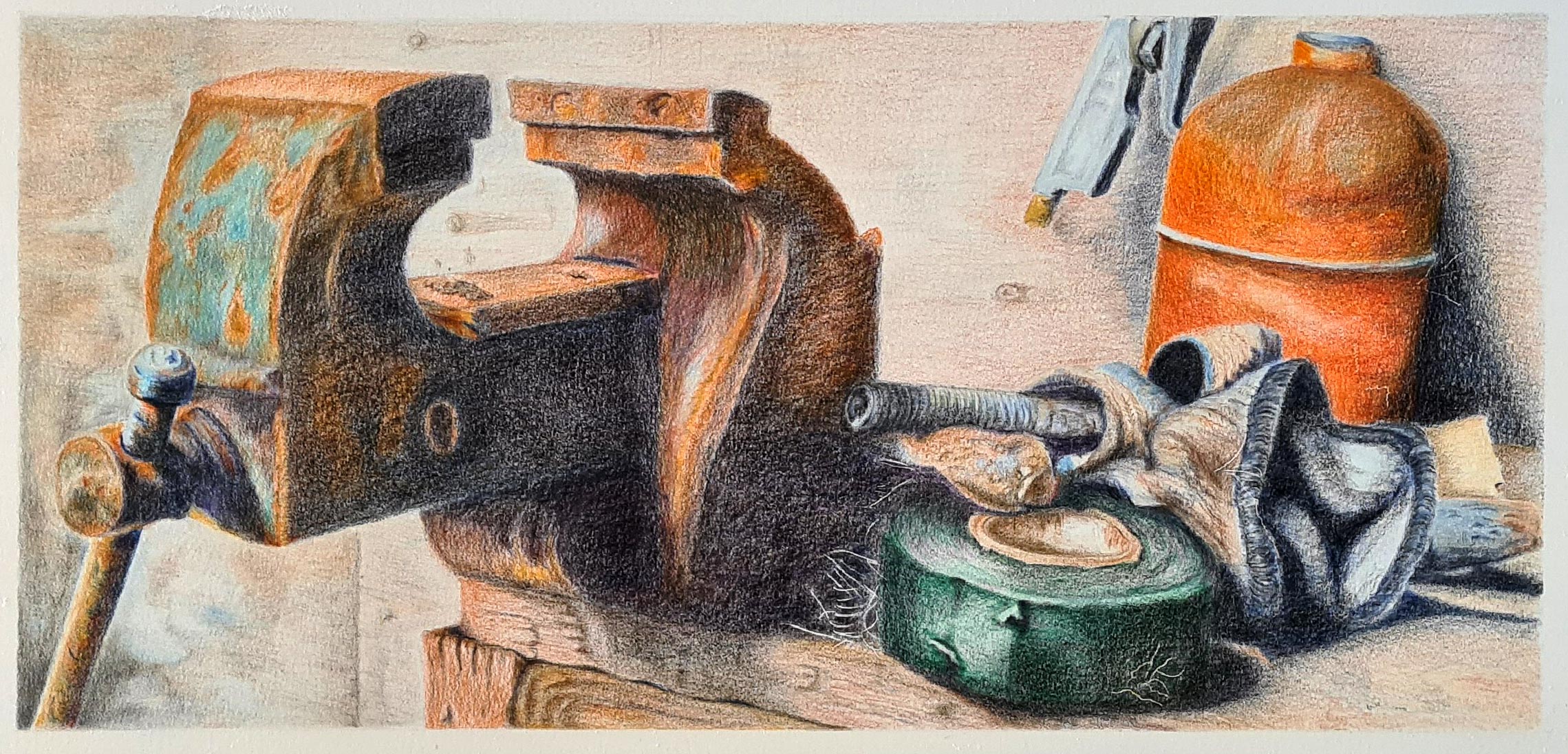
Why Choose Online Art Learning?
Flexibility That Fits Your Life One of the biggest advantages of online art courses is the ability to learn at your own pace. Unlike traditional classroom settings, you can:
- Study during hours that work for your schedule
- Revisit lessons as many times as needed
- Progress faster through areas you grasp quickly
- Take more time with challenging concepts
Global Learning Community When you learn art online, you’re not isolated. At London Art College, our students come from over 75 countries, creating a diverse, supportive community where you can share your work, get feedback and find inspiration from fellow artists worldwide. Our Facebook groups are lively and fun to be part of, plus we have weekly challenges to keep you occupied!
Cost-Effective Education Online art courses typically cost significantly less than traditional art school, without compromising on quality. You save on accommodation, travel, and many other expenses while still receiving professional tutor guidance.
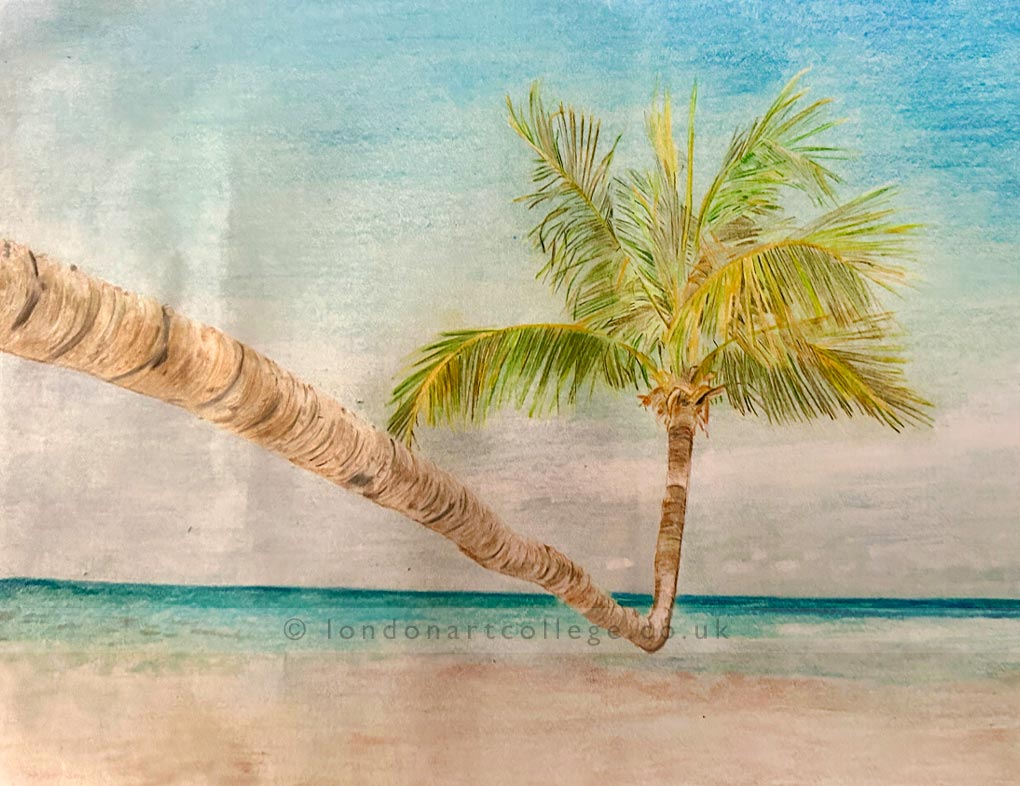
What You’ll Need to Get Started
Essential Art Supplies for Beginners
Drawing Basics:
- Quality pencils (2H, HB, 2B, 4B, 6B)
- Kneaded eraser and white vinyl eraser
- Blending stumps
- Drawing paper (smooth and textured)
- Basic ruler
If You’re Interested in Painting:
- Acrylic paints (primary colors plus black and white to start)
- Brushes in various sizes
- Canvas boards or canvas paper
- Palette for mixing colors
- Water containers and paper towels
Digital Art Option:
- Graphics tablet (entry-level tablets are very affordable)
- Art software (many free options available)
- Computer or tablet
Pro tip: Start with basic supplies and upgrade as you develop your skills and discover your preferred medium.
Setting Up Your Home Studio
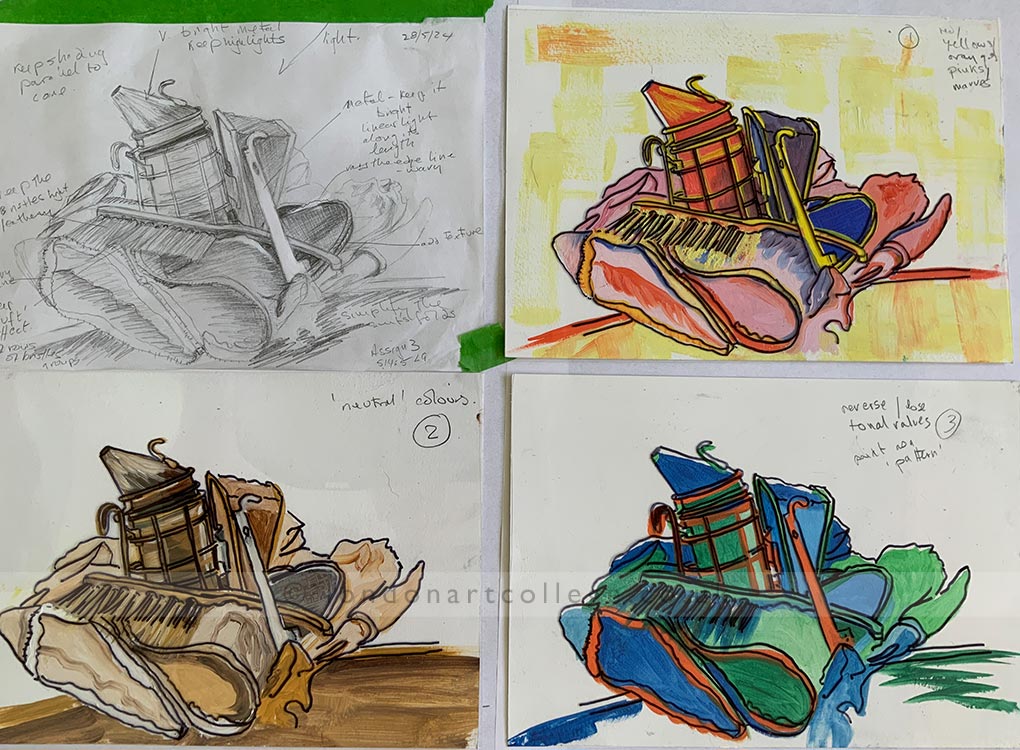
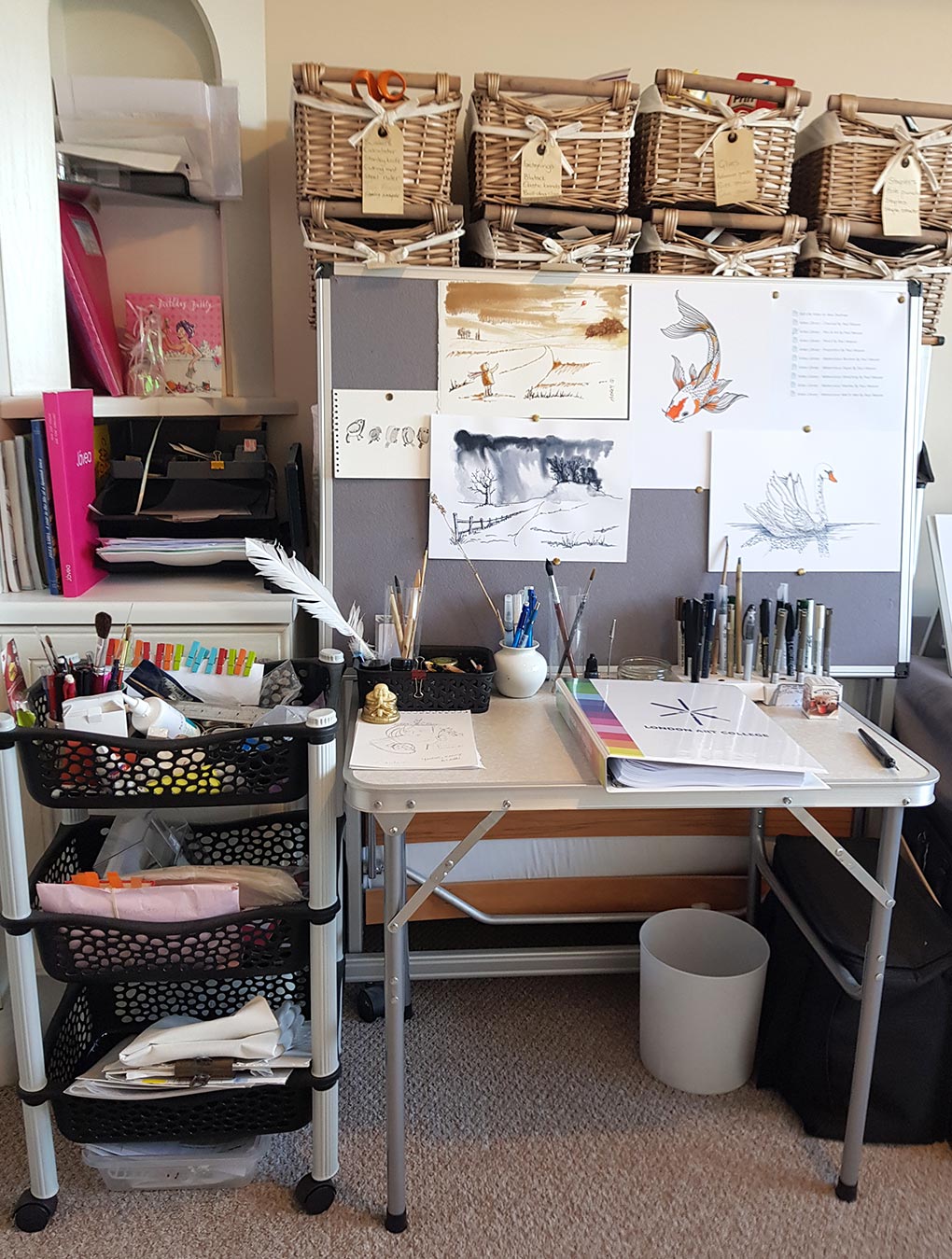
You don’t need a dedicated art room to start learning. This is a photo of one of our lovely students art spaces below in her spare room. Here’s how to create an effective workspace:
- Good Lighting: Natural light is ideal, but a quality desk lamp works well for evening sessions.
- Comfortable Seating: An adjustable chair that supports good posture during longer drawing sessions.
- Storage Solutions: Simple drawers or boxes to keep supplies organized and easily accessible.
- Inspiration Board: A space to pin reference images, color palettes, or motivational artwork.
Choosing Your First Online Art Course
Consider Your Goals
Hobby vs. Career Development
- Are you learning for personal enjoyment and stress relief?
- Do you hope to eventually sell your artwork or pursue art professionally?
- Are you looking to develop a specific skill like portrait drawing or landscape painting?
Course Features to Look For
Personal Tutor Support Look for courses that provide individual feedback on your work. At London Art College, each student is assigned a personal tutor who reviews their assignments and provides detailed, constructive feedback to help them improve.
Flexible Submission Methods Choose courses that allow you to submit work digitally through photos or scans, making the process convenient and accessible.
Comprehensive Course Materials Quality online courses should provide detailed written materials, step-by-step instructions, and visual examples to guide your learning.
No Rigid Deadlines The best online art courses allow you to progress at your own pace without stressful deadlines, giving you up to two years to complete your studies.
Getting the Most from Your Online Art Education
Establish a Routine
Set Regular Practice Time Even 30 minutes of daily practice is more beneficial than sporadic longer sessions. Consistency builds muscle memory and helps develop your observational skills.
Create a Learning Schedule
- Review new course materials
- Practice specific techniques
- Work on assignments
- Study other artists’ work for inspiration
Stay Motivated
Document Your Progress Take photos of your work regularly. You’ll be amazed at how much you improve over time, and this visual record can be incredibly motivating during challenging periods.
Join Online Communities Participate in our student social media groups, or online challenges. Sharing your work and seeing others’ progress creates accountability and inspiration.
Celebrate Small Wins Acknowledge improvements in your technique, successful completion of challenging exercises, or positive feedback from your tutor.
Common Challenges and How to Overcome Them
“I’m Not Naturally Talented”
Art is a skill that develops with practice, not an inborn talent. Every professional artist started as a beginner. Focus on steady improvement rather than comparing yourself to others.
“I Don’t Have Time”
Start small. Even 15-20 minutes of daily practice can lead to significant improvement. Many successful artists developed their skills by drawing during lunch breaks or sketching while watching television.
“I Don’t Know Where to Start”
This is exactly why structured courses exist. A well-designed curriculum takes you from basic techniques to more advanced concepts in a logical progression.
“I Can’t Afford Expensive Supplies”
Start with basic, affordable materials. As your skills develop and you discover your preferences, you can gradually invest in higher-quality supplies.
Building Your Artistic Foundation
Master the Fundamentals
Observation Skills Learning to really see what you’re drawing is crucial. Practice drawing simple objects, focusing on accurate proportions and details.
Basic Shapes and Forms Everything in art can be broken down into basic geometric shapes. Master these, and you can draw anything.
Understanding Light and Shadow Learning how light affects objects gives your drawings dimension and realism.
Color Theory Basics If you’re interested in painting, understanding how colors work together is essential for creating harmonious compositions.
Develop Your Personal Style
While learning fundamentals is crucial, don’t be afraid to experiment and find what appeals to you. Your unique perspective and interests will naturally influence your artistic style as you gain confidence.
Making the Most of Tutor Feedback
How to Submit Quality Work for Review
Good Photography
- Use natural light when possible
- Avoid shadows on your artwork
- Take photos straight-on to prevent distortion
- Include the full piece in your photo
Ask Specific Questions Instead of just asking “How can I improve?”, try questions like:
- “How can I make this shadow more realistic?”
- “What techniques would help me achieve better proportions?”
- “How can I improve the composition of this piece?”
Implementing Feedback Effectively
Take Notes Write down your tutor’s suggestions and refer back to them in future work.
Practice Recommended Techniques Don’t just read the feedback—actively practice the specific techniques your tutor suggests.
Ask Follow-Up Questions If something isn’t clear, don’t hesitate to ask for clarification. Your tutor wants to see you succeed.
Beyond Your First Course
Building a Portfolio
Start collecting your best work from the beginning of your studies. A portfolio demonstrates your progress and can be useful if you decide to pursue further art education or begin selling your work.
Exploring Different Mediums
Once you’re comfortable with basic drawing, consider exploring:
Connecting with the Art Community
Local Art Groups Many areas have local art societies or sketch groups where you can meet fellow artists and practice together.
Online Exhibitions Many online platforms allow you to showcase your work and receive feedback from other artists.
Art Challenges Participate in our weekly drawing challenges to push your creative boundaries.
Success Stories: Real Students, Real Progress
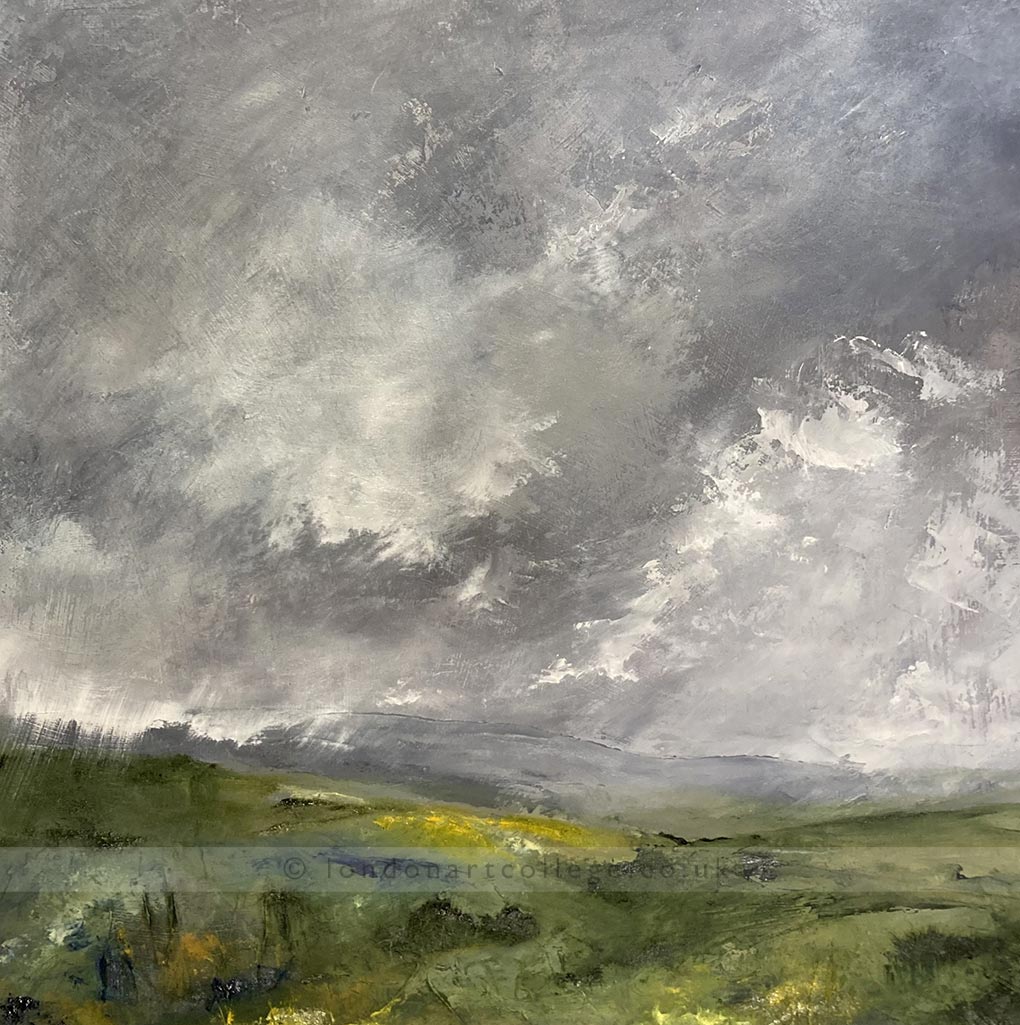
“Deciding to take this course was one of the best decisions I have ever made. LAC stepped in at the right place and the right time for me. To have a long distance art course available that was no only affordable but practical was such a perfect fit.
This course has not only allowed me to dip into new mediums that I am still joyfully experimenting in, but it has helped me to focus and to truly observe the things around me. Your critiques have been invaluable in helping me to objectively critique my art and others and to really pay more attention to my work. I now realize that I will never be a ‘good enough artist’ but that I can go on improving and learning as long as I can and that is no longer a thought that intimidates me, it excites me!
I truly wish to thank you and LAC for your guidance, patience, knowledge, skill and for making yourself available to students like me. I am thrilled to be a part of the beauty and discovery of art and it has been affirmed to me through this course that I would someday like to support myself with my work.
Thank you again, Sincerely – your student
“ – Alison T, Drawing and Painting Diploma
Getting Started Today
The most important step in learning art online is simply beginning. You don’t need to wait for the “perfect” time or until you have all the “right” supplies. Start with what you have, commit to regular practice, and trust the learning process.
Ready to Begin Your Artistic Journey?
At London Art College, we offer over 30 online art courses designed for students of all levels. Whether you’re interested in drawing, painting, illustration, or specialized subjects like botanical art or pet portraits, we have a course that can help you achieve your artistic goals.
Our experienced tutors provide personal guidance every step of the way, and you’ll join a supportive global community of artists at all stages of their creative journey.
What makes London Art College different:
- Personal tutor assigned to every student
- Study at your own pace with up to 2 years to complete
- Students from over 75 countries worldwide
- Established distance learning provider since 1931
- Flexible submission methods (online or postal)
- Comprehensive course materials and exclusive video tutorials
Take the First Step
Browse our course selection and find the perfect starting point for your artistic journey. Remember, every professional artist was once a beginner who decided to take that first step.
London Art College Art Courses
Have questions about getting started? Contact our friendly admissions team at admin@londonartcollege.co.uk or call us to speak with a course advisor who can help you choose the perfect course for your goals and experience level.
If you would like to receive a roundup of all of our blog posts once a week to keep you inspired in your inbox, why not sign up to our newsletter. You can access our sign up at the top of our page. If you are a London Art College student and you would like your artwork featured here, drop us a line at any time.
