
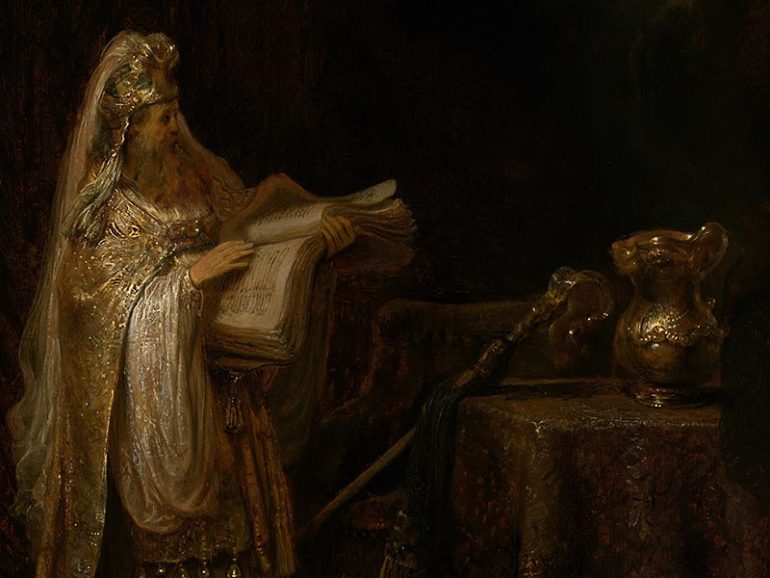
If you love art, and we know you do, then the recent news is genuinely thrilling. A painting by Rembrandt van Rijn, one of the greatest artists who ever lived, has just been confirmed as authentic after more than 60 years of doubt.
Who Was Rembrandt?
Rembrandt van Rijn was a Dutch painter born in 1606, and he is widely considered one of the most gifted and influential artists in the entire history of Western art. He worked primarily in the 17th century, a period known as the Dutch Golden Age, when Amsterdam was a thriving centre of trade, culture and artistic ambition.
What made Rembrandt so extraordinary was his mastery of light and shadow, a technique known as chiaroscuro. He had an unrivalled ability to make light feel as though it was truly falling across a surface, whether across a human face, a fold of fabric, or the pages of a book. His portraits feel almost startlingly alive, as if the subject might blink at any moment. His self-portraits, of which he painted dozens throughout his life, are among the most honest and searching studies of a human face ever committed to canvas.
He also had a remarkable gift for storytelling. His biblical and historical scenes are full of psychological depth, capturing not just the moment, but the emotion behind it, the doubt, the fear, the wonder, the grief. He painted ordinary people with the same dignity he gave to saints and scholars, and that humanity shines through every brushstroke.
For anyone studying drawing, painting, or any figurative art, Rembrandt is essential. He teaches us how to see tone, how to use shadow to create form, and how to bring a face to life with just a few carefully placed marks of light.
The Exciting News
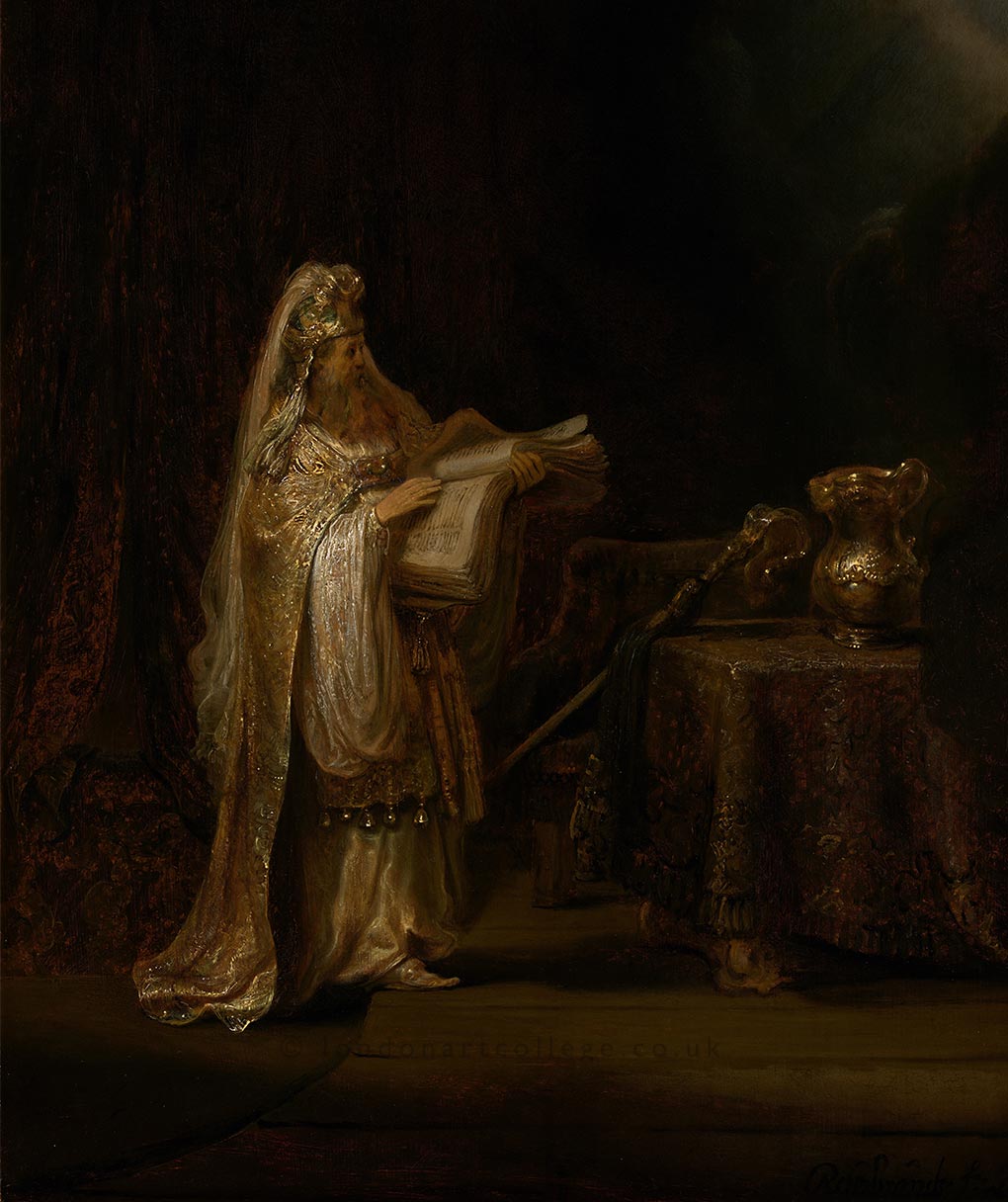
Earlier this year, the Rijksmuseum in Amsterdam, one of the world’s great art institutions, made a remarkable announcement. A painting called Vision of Zacharias in the Temple, dated 1633, has been confirmed as a genuine Rembrandt, overturning a judgement that has stood since 1960.
For more than six decades, this painting sat at the edges of Rembrandt’s accepted catalogue, doubted by scholars and largely unseen by the public. It had been purchased privately in the early 1960s and effectively disappeared from view. Then the current owner approached the Rijksmuseum, and two years of intensive research followed.
The team used the same advanced scientific techniques applied during the famous Operation Night Watch conservation project, including pigment analysis, X-ray scanning and dendrochronology, the study of tree rings in the wooden panel. The pigments match those found in other Rembrandt works from the early 1630s, the layering and handling of paint aligns with the young artist newly arrived in Amsterdam from Leiden, and even the signature holds up under scrutiny. The wooden panel itself confirms the date of 1633.
The subject is drawn from the Gospel of Luke. The high priest Zacharias stands in the Temple when the Angel Gabriel appears to announce that he and his wife will have a son, John the Baptist, despite their old age. The angel is not visible in the painting. Instead there is light, falling sharply from the upper right, cutting across the darkness. Zacharias looks up, startled, and that flicker between disbelief and dawning wonder feels unmistakably Rembrandt.
Rembrandt was just 27 when he painted this, newly embedded in Amsterdam’s competitive art market and already testing how far narrative painting could be pushed. That ambition is visible in every corner of the canvas.
The painting went on public display at the Rijksmuseum from 4 March 2026. If you ever find yourself in Amsterdam, it is now very much worth a visit.
For all of us who love art, and who spend our time looking carefully, mixing colours and trying to capture light on a surface, this is a beautiful reminder of why it all matters. Rembrandt was doing exactly what you are doing, observing, practising, refining, and pushing himself to do better. Nearly 400 years later, the world is still stopping to look.
If you would like to receive a roundup of all of our blog posts once a week to keep you inspired in your inbox, why not sign up to our newsletter. You can access our sign up at the top of our page. If you are a London Art College student and you would like your artwork featured here, drop us a line at any time.
